
Search isn’t what it used to be—and AI is the reason why.
Today, tools like ChatGPT are changing how people search for information. Instead of typing short, generic keywords like “face sunscreen,” users now ask detailed, conversational questions like “best mineral sunscreen for oily, acne-prone skin under $20.” These longer, more specific queries reveal exactly what people are looking for—and they expect instant, accurate answers.
And here’s the shift: many users are getting those answers without ever clicking a website.
With features like Google AI Overview, search engines now pull information from multiple sources and display it directly on the results page. That means your content isn’t just competing for rankings anymore—it’s competing to be selected as the answer.
Even so, Google still handles billions of searches every day. But the way people interact with those results is evolving fast.
So what does this mean for your SEO strategy?
It’s simple: stop guessing what users might search and start answering what they’re actually asking. Create content that directly responds to real, specific questions in a clear and helpful way. Because in the age of AI, visibility isn’t just about ranking—it’s about relevance.
AI Has Changed How People Search
Search behavior has taken a big leap forward—and AI is driving it.
Today, people don’t just type simple keywords. They ask detailed questions using voice search and AI tools like ChatGPT. And instead of browsing multiple websites, they often get complete answers instantly—without even opening a page.
Search engines have adapted quickly. Features like Google AI Overview and Microsoft Copilot now deliver short, easy-to-digest summaries right at the top of the results. These summaries pull key information from different sources and present it in a clear, “quick answer” format, sometimes with links to the original content.
Sounds helpful, right? It is, but there’s a catch.
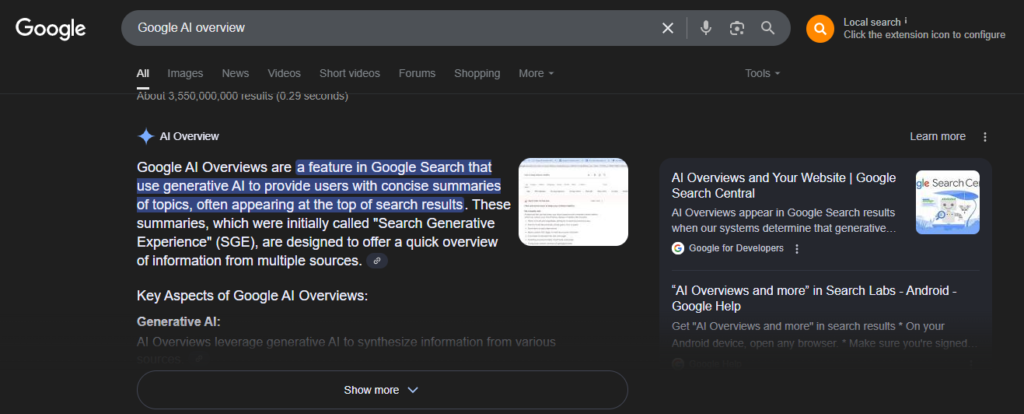
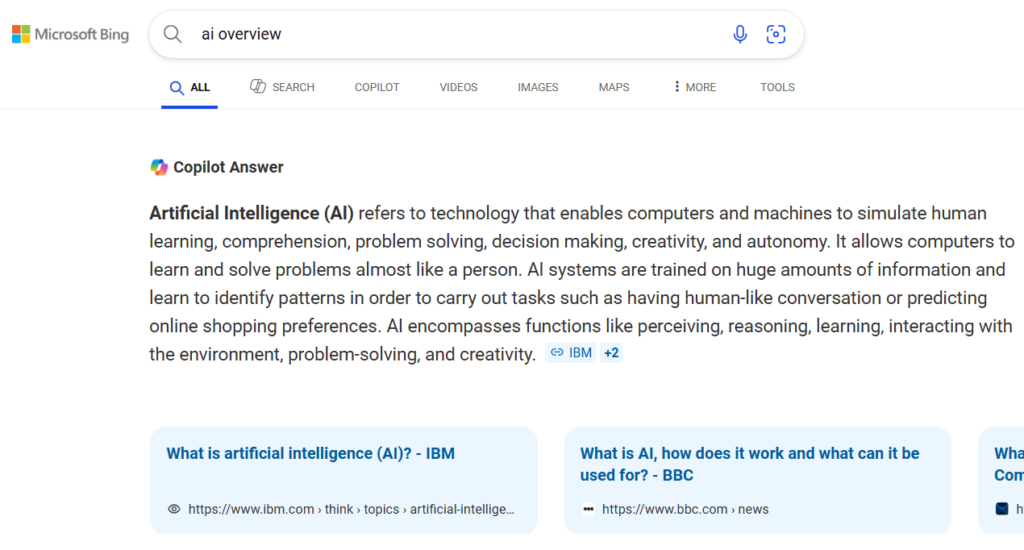
Most users stop at the summary. They don’t scroll, click, or explore further. Even if your content is part of that answer, it may never get a visit. AI is essentially doing the reading for them.
What’s more, even when AI tools include warnings about possible inaccuracies, people tend to trust what they see first. Back in 2024, Google faced criticism for incorrect AI-generated answers—but convenience often outweighs caution. If the answer looks “good enough,” users rarely dig deeper.
The result? Organic listings are being pushed further down the page, leading to more zero-click searches and fewer website visits—even when your content is the source behind the answer.
In short, your content might still be powering search—but it’s no longer guaranteed to get the credit (or the click).
Adapting to the Rise of AI-Generated Search Summaries
AI summaries are quickly becoming a major part of search, and SEO is evolving with them.
Traditional SEO still matters, but it’s no longer enough on its own. To stay visible, your content needs to work for both real people and AI systems. That means making it easy to read, easy to understand, and easy to pull information from.
Here’s what that looks like in practice:
- Use clear headings that guide readers through your content
- Keep your formatting clean and scannable
- Answer real questions in a direct, helpful way
- Build trust with accurate, experience-driven content (E-E-A-T)
Let’s be honest—organic traffic is likely to decline. Even Google has acknowledged this shift. AI summaries give users quick answers upfront, which means fewer clicks overall.
But here’s the upside: the clicks you do get are more valuable. These users are usually more interested, more informed, and closer to taking action.
Your goal? Make those clicks count. Focus on creating content that goes deeper—something AI can’t fully replace with a short summary.
Adapting to Google AI Mode
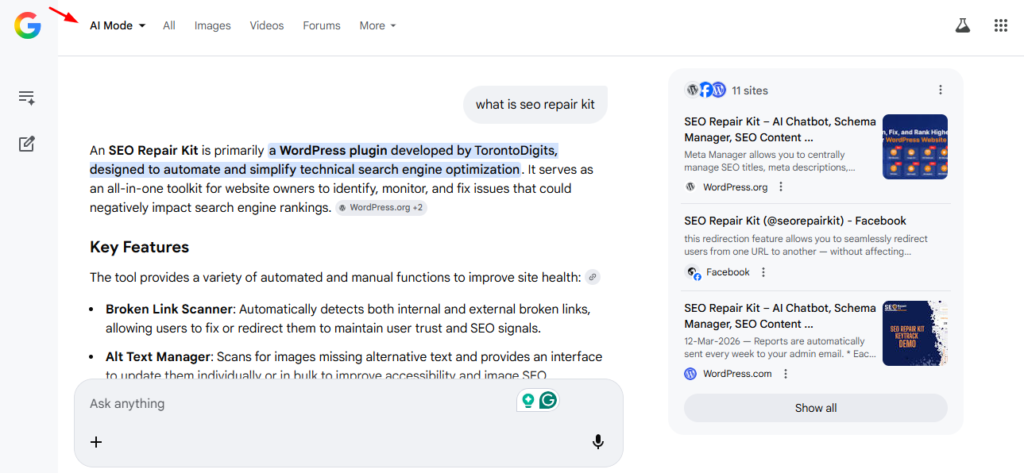
AI Mode is the next step in how search is evolving—and it’s changing the way users interact with results in a big way.
Unlike traditional search or even AI summaries, Google AI Mode turns searching into an ongoing conversation. Users can ask follow-up questions, refine what they’re looking for, and explore a topic more deeply—all without leaving the search page.
Traditional SEO still plays a role, but it’s no longer just about ranking for one query. To stay visible in AI Mode, your content needs to support entire conversations, not just single answers.
Here’s what that looks like in practice:
- Cover topics in depth, not just individual keywords
- Anticipate follow-up questions and answer them naturally
- Use clear structure so AI can easily understand context
- Keep content updated and relevant as queries evolve
- Build authority by consistently publishing high-quality content
Let’s be real—AI Mode will likely reduce clicks even further. When users can explore a topic step-by-step within search, they have fewer reasons to visit multiple websites.
But here’s the opportunity: when users do click through, they’re highly engaged. They’ve already explored the basics and are looking for deeper insights, solutions, or next steps.
Your goal? Be the source that goes beyond the surface. Create content that adds real value—insights, expertise, and perspectives that can’t be fully captured in a conversational summary.
Because in AI Mode, visibility isn’t just about being found—it’s about being worth the click.
Your AI-Powered SEO Game Plan
AI may be changing how search works, but the core principles of SEO haven’t disappeared—they’ve just become more important. Here’s how to adapt:
1. Create Content That Actually Helps
Generic, keyword-stuffed content doesn’t stand a chance anymore. With AI generating content at scale, only truly useful information stands out.
Answer the questions your audience is already asking. Add real value with examples, insights, or data that users won’t find in a quick AI summary. That’s how you earn trust—and attention.
2. Focus on People, Not Just Search Engines
It’s easy to get caught up in algorithms, but your real audience is human. Write in a way that feels natural, clear, and relevant to their needs.
When your content genuinely helps someone solve a problem, search performance usually follows. Good SEO today is simply good communication.
3. Get Your Technical SEO Right
Behind every great page is a solid technical foundation. Fast loading speeds, clean code, and proper structure help search engines (and AI tools) understand your content better.
Things like schema markup and organized page structure aren’t just technical extras—they improve your chances of being seen, trusted, and featured when it matters most.
In short, AI is changing the rules—but not the goal. If your content is clear, helpful, and trustworthy, you’ll stay ahead—no matter how search evolves.
The Role of AI in Your SEO Strategy
AI isn’t just changing how people search—it’s also transforming how marketers get work done.
When used the right way, AI can make your SEO process faster, smarter, and more efficient. From keyword research to technical fixes, it helps simplify tasks that used to take hours. But here’s the key thing to remember: AI doesn’t replace strategy—it supports it.
Even with tools like ChatGPT shaping search behavior, the fundamentals of SEO still matter. AI-generated summaries pull from high-quality, well-structured content. So if your foundation is strong, you’re already on the right track. AI just helps you get there quicker.
Let’s break down where AI can make the biggest impact:
1. Smarter Keyword Research
AI tools can quickly generate long-tail keyword ideas, group related topics, and spot trends based on real-time data.
Instead of starting from scratch, you get a solid list of opportunities right away. From there, your job is to choose what actually fits your audience and business goals.
2. Better Content Structure
AI can help organize your content by suggesting headings, sections, and logical flow. This makes your pages easier to read—and easier for search engines to understand.
Some tools even recommend schema markup, helping platforms like Google better interpret your content.
3. Easier Internal Linking
Tools like Link Whisper can scan your website and suggest relevant internal links. This improves navigation, strengthens SEO, and helps important pages get discovered.
It saves time—but always review suggestions to make sure they actually add value.
4. Faster Site Performance Improvements
Site speed still matters—a lot. Slow pages frustrate users and hurt rankings.
AI tools can analyze your website, highlight performance issues, and recommend fixes so your team knows exactly what to improve.
5. Content Creation Support
AI is great for speeding things up. It can draft outlines, write meta descriptions, and generate alt text in seconds.
But when it comes to building trust and authority, human input is essential. Your voice, your insights, and your experience are what make content truly stand out. Both search engines and readers can tell the difference.
6. Streamlined Backlink Outreach
AI can help you find relevant websites, gather contact details, and even draft outreach emails. This makes the backlink process much more efficient.
Still, strong backlinks come from genuine relationships and credibility—not automation alone.
Use AI as a tool—not a replacement.
It can help you research, organize, and move faster. But the real value comes from your thinking, your creativity, and your perspective. That human touch is what builds trust, connects with your audience, and makes your brand memorable.
And yes—real people still matter on the internet.
AI Is Changing SEO—But the Goal Stays the Same
At its core, SEO is still about helping people find what they need. AI may change how they search and what shows up first, but the goal hasn’t changed. If your site is the most helpful, most trustworthy source in your space, both people and AI will keep coming back.
Your customers are searching smarter. With the right strategy, AI can help you meet them where they are. Let’s talk about how to keep your content relevant, useful, and visible.